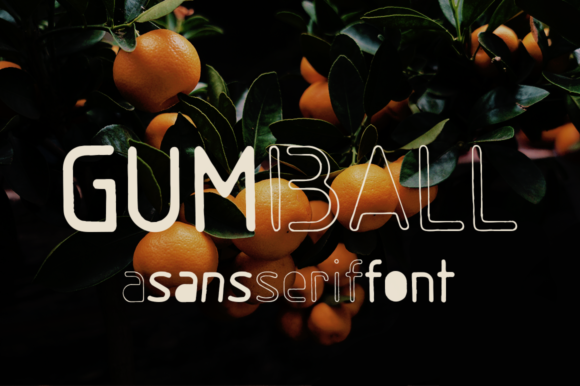
Gumball: A Hand-Drawn Display Typeface for Modern Web Design
In the crowded landscape of digital interfaces, first impressions are everything. As a web designer and UI creator, I spend hours obsessing over pixel-perfect alignment, loading speeds, and conversion funnels. But there is one element that often dictates the emotional tone of a site before a user even reads the body copy: the typography. Specifically, the choice between rigid geometric structures and organic, human-centric forms. This is where Gumball enters the conversation. It is not just another sans serif font; it is a hand-drawn display typeface crafted with a letter ruler, offering a distinct texture that bridges the gap between professional branding and approachable creativity.
When we talk about modern web design, we are no longer limited to standard system fonts. Clients and founders want their digital spaces to feel alive, tactile, and memorable. Gumball delivers this by providing a versatile sans serif structure with a real handmade texture. Its irregularities are not flaws; they are features. They signal authenticity in an era where users are increasingly skeptical of overly polished, corporate aesthetics. For digital product creators, landing page designers, and SaaS founders, using a creative font like Gumball can instantly differentiate a brand identity from competitors who rely on generic Helvetica or Roboto clones.
The Visual Personality of Gumball in Digital Spaces
Gumball belongs firmly in the display category. This classification is crucial because it dictates how and where you should use it. Unlike a workhorse body text font designed for long-form readability, Gumball is built to make a statement. Its visual characteristics—slightly uneven stroke weights, soft edges, and a playful yet structured rhythm—evoke a sense of informality without sacrificing legibility. This makes it ideal for contexts where you need to grab attention quickly.
Imagine a hero section for a boutique online store selling handmade ceramics. A sterile, cold font would clash with the artisanal nature of the products. Gumball, with its warm, hand-crafted vibe, complements the imagery perfectly. It tells the visitor that this brand values craftsmanship and human touch. Similarly, for a coaching website or a creative portfolio, Gumball serves as an excellent tool for establishing trust. The font’s personality suggests transparency and friendliness, which are key psychological triggers for engagement in service-based industries.
However, the "hand-drawn" aspect requires strategic application. Because Gumball has a unique texture, it competes visually with other complex elements. This is why understanding visual hierarchy is paramount. When you introduce Gumball into a layout, it naturally becomes the focal point. It demands space. Therefore, it works best when isolated against clean backgrounds or used in large sizes where its details can be appreciated. If you try to squeeze it into small navigation menus or dense paragraphs, its charm turns into clutter, harming the user experience rather than enhancing it.
Strategic Applications for Conversion-Focused Layouts
For digital marketers and e-commerce owners, typography is a silent salesperson. Here is how Gumball can support conversion-focused layouts across various digital touchpoints:
- Hero Sections and Headlines: Use Gumball for the main H1 tag on your landing pages. Its bold presence ensures that your value proposition is read immediately. Pair it with a simple, neutral background to let the letters breathe.
- Call-to-Action (CTA) Areas: While buttons usually require high legibility, using Gumball for short phrases within banner ads or promotional overlays can increase click-through rates by adding visual interest. Just ensure the contrast ratio meets accessibility standards.
- Online Shop Banners: For seasonal sales or new product launches, Gumball adds a festive, energetic feel. It performs exceptionally well on social media graphics that drive traffic back to your web store.
- Course Sales Pages: In the education sector, authority and approachability must coexist. Gumball helps break down intimidating educational content by making headers feel inviting and personal.
Consider a practical example: a creative entrepreneur launching a digital template kit. By using Gumball for the title "Create Your Brand in Minutes," the font reinforces the promise of ease and creativity. The slight imperfections in the letterforms mirror the customizable, non-rigid nature of the product itself. This consistency between font personality and product value strengthens brand recall.
Readability and Responsive Design Considerations
As web designers, our primary responsibility is usability. Even the most beautiful font fails if it cannot be read on a mobile device. Gumball, being a sans serif font, generally offers good x-height and open counters, which aids readability. However, its decorative nature means it should never be used for body copy. Reserve it for headlines, subheads, and short textual accents.
When designing for responsive layouts, pay close attention to screen size. On smaller mobile screens, the intricate details of a hand-drawn font can become muddy if the resolution is low or the text size is too small. Test Gumball at various breakpoints. Ensure that on devices with lower DPI, the font remains crisp. Using media queries to adjust font sizes dynamically is essential. For instance, you might scale Gumball down significantly on mobile while keeping it prominent on desktop views.
Contrast is another critical factor. Gumball shines on light backgrounds, where its dark strokes provide clear definition. On dark backgrounds, ensure the weight of the font is sufficient to prevent it from disappearing into the darkness. Lighter weights may lose their character on black or deep navy backgrounds, so stick to the bolder variants of the typeface for dark mode implementations. Additionally, avoid placing Gumball directly over busy images or complex patterns. The handmade texture will fight with the image noise, creating visual vibration that causes eye strain. Always use ample padding or a semi-transparent overlay behind the text to maintain clarity.
Font Pairing and Technical Implementation
One of the biggest challenges in web design is balancing personality with function. Gumball is a strong personality; therefore, it needs a calm partner. The golden rule here is to pair a decorative display font with a highly readable sans serif or serif font for body text. Since Gumball is already a sans serif style, pairing it with a classic sans serif like Inter, Open Sans, or Lato creates a harmonious modern look. The neutral body font handles the heavy lifting of information delivery, allowing Gumball to focus on emotional impact.
Alternatively, for a more editorial or sophisticated digital identity, you might pair Gumball with a elegant serif font. This combination plays on the contrast between the handwritten casualness of the headline and the structured formality of the body text. This technique is popular in lifestyle blogs, fashion e-commerce sites, and high-end agency portfolios.
From a technical standpoint, always verify the file formats included with the font. For web use, you need WOFF2 files for optimal performance and cross-browser compatibility. Check if the license covers web embedding, as many commercial fonts have separate licenses for desktop use and web usage. Ensure you have access to multiple weights if available, as this allows for better typographic scaling. Also, check for multilingual support if your audience is global; a hand-drawn font may not include accents or special characters needed for European languages.
Licensing and Commercial Usage
Finally, never overlook the legal aspects of using premium fonts. Whether you are designing for yourself or a client, proper licensing is non-negotiable. Gumball is a commercial font, meaning you must purchase the appropriate license for each project scope. If you are building a website for a client, ensure the webfont license is included in your quote. If you are creating digital products like Notion templates or Canva kits, check if the font license permits redistribution or if the end-user needs their own license. Transparency with clients about these costs builds trust and protects both parties from potential copyright infringement issues.
In summary, Gumball is a powerful asset for any web designer’s toolkit. It brings warmth, character, and a human touch to digital experiences that are often devoid of them. By using it strategically for headlines and branding elements, and pairing it wisely with functional body text, you can create websites that are not only beautiful but also engaging and effective. Embrace the handmade aesthetic to stand out in a sea of standardized digital design.